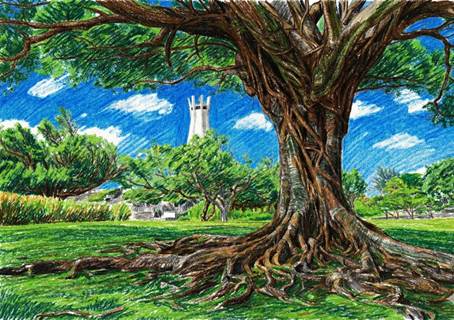
Dialogues in Chimugurisa
About the Battle of Okinawa
What Was the Battle of Okinawa?
— A Battlefield That Lives on in Memory —
Why We Must Remember
The Battle of Okinawa was the only ground battle fought on inhabited Japanese soil during World War II that involved large-scale civilian casualties. In the spring of 1945, the U.S. military launched a full-scale invasion, leading to three months of intense and devastating combat.
More than 200,000 lives were lost, including tens of thousands of civilians. People fled under fire, hid in caves and makeshift shelters, died of starvation and disease, and in some tragic instances, were killed by soldiers from their own military.
Crucially, the tragedy of Okinawa extended beyond its local residents. Many others—including Korean and Taiwanese laborers, and individuals from mainland China—were brought to Okinawa as conscripted or forcibly mobilized colonial subjects. They were forced to work in construction and military support under extreme conditions. Many died, often anonymously, and their stories remain underrepresented in public memory. To study the Battle of Okinawa is to honor those whose suffering has long remained invisible.
While June 23 is recognized as the end of organized military operations, for survivors, the violence did not stop there. The trauma continued through mopping-up operations, displacement, internment, and the ongoing threats of hunger, illness, and sexual violence.
The end of the battle was not the end of the suffering.
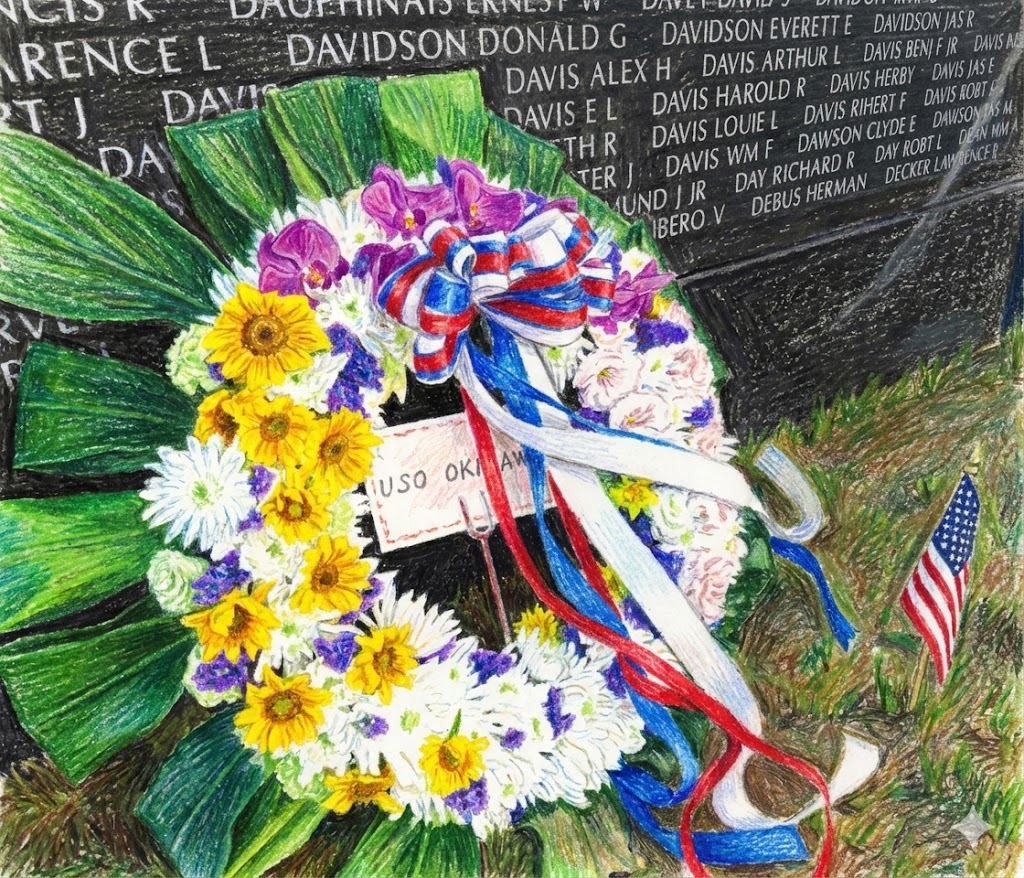
When Everyday Life Becomes a Battlefield
One of the defining features of the Battle of Okinawa was that the battlefield was not a distant front; it was home. The places of daily life—homes, gardens, schoolyards, farms, beaches, and family altars—all became battlegrounds.
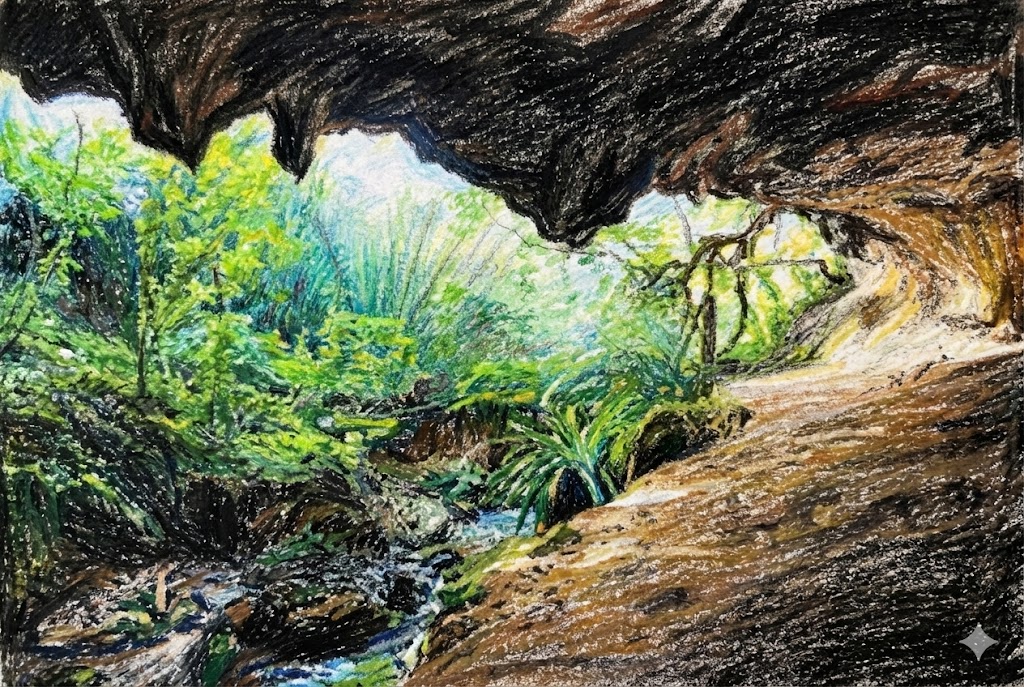
Natural caves (gama) were transformed into shelters, makeshift hospitals, and eventually, graves. Fields and wells became sites of terror. The everyday spaces where people worked, raised children, and honored their ancestors were shattered.
In Okinawa, memory is not abstract. It is deeply rooted in the land, in the body, and in the physical spaces of everyday life. Even today, there are places people avoid—landscapes where words fail. To speak of the war is not just to recount historical facts, but to face memories that are still held within the living environment.
The Silence After the War
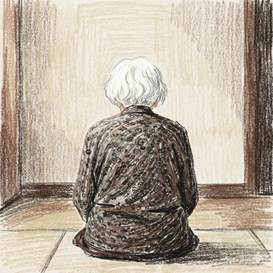
Following the war, Okinawa was placed under U.S. military rule. Faced with poverty, land seizures, and the construction of military bases, survivors often had neither the opportunity nor the safety to speak openly.
Many kept silent—not because they forgot, but because the pain was too raw. When some tried to speak, they were often told to move on. This silence was not an absence of memory; it was a “presence unspoken.”
And when the silence finally began to break—sometimes decades later—the voices that emerged carried the immense weight of having lived for so long without being heard.
Testimony, Dialogue, and a New Form of Record
Over the decades, countless testimonies of the Battle of Okinawa have been documented by local governments, educators, and researchers. Yet, few initiatives have sought to record something deeper: the process of dialogue itself.
How do stories shift and evolve over time?
How do people speak and listen together?
How does memory unfold between individuals, rather than just within them?
This website, Dialogues in Chimugurisa*, represents a unique attempt to capture these dynamics. It does not aim to merely extract stories or gather data. Instead, it documents a space where survivors could return, again and again, to speak in their own time and in the company of others.
The result is more than a record of what happened; it is a record of what it means to carry memory—together.
What Can We Learn from the Battle of Okinawa?
To learn about Okinawa is not simply to study history. It is to listen to pain, to silence, and to the enduring human desire for connection.
From these stories, we learn:
- That national ideologies can override the sanctity of individual lives and homes.
- That protecting a loved one can become a matter of agonizing life-or-death choices.
- That even silence is a form of remembering.
- And that storytelling—however difficult—can become a bridge between people.
These lessons are not confined to the past. They ask us how we live, how we listen, and how we might build a future worth remembering.
In Closing: A Memory for All Humanity
The Battle of Okinawa is not an event that belongs to Okinawa alone. It is a universal memory of how human beings are wounded, how they survive, and how they eventually find their voices to speak.
In an era where the voices of survivors are fading, how will we confront these memories and carry them forward?
What can we do to pass on chimugurisa*—the heart-wrenching sorrow of others—to the future as chimugukuru**—the spirit of sincerity and compassion?
Through this website, we hope to continue exploring these questions together with all of you.
*chimugurisa: “the pain of feeling another’s sorrow in one’s own heart”
**chimugukuru: “the core of human kindness and sincerity”